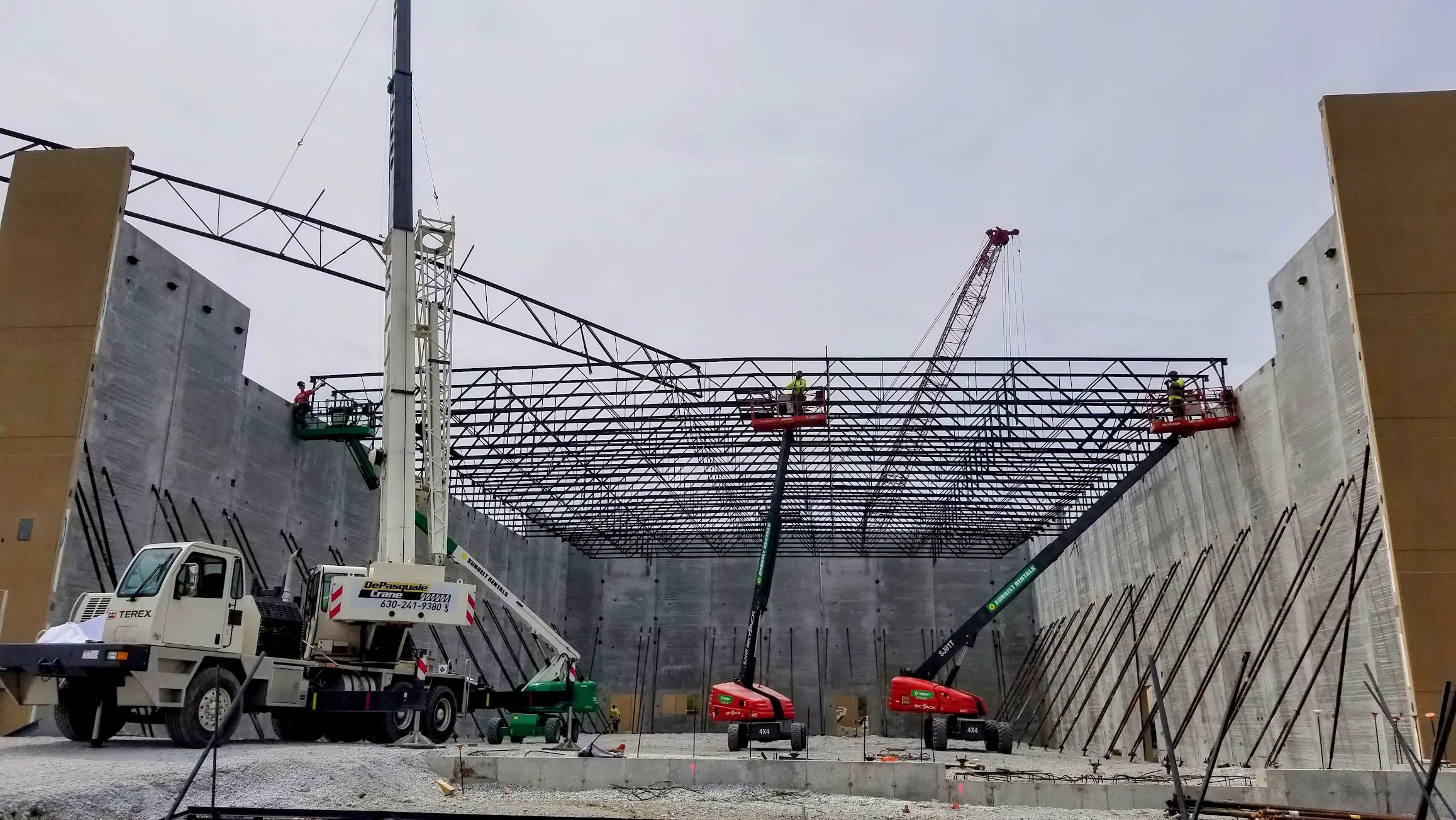
Why Steel Erection Companies Choose Crane Rentals
Steel erection requires precision, power, and expertise. Whether you’re building a multi-story office complex, an industrial facility, or a parking structure, having the right crane and operator makes the difference between a project that runs smoothly and one that faces costly delays.
Key Benefits for Steel Erection Contractors
- Precision Placement: Accurate positioning of beams, columns, and structural members
- Enhanced Safety: Proper equipment reduces risk to ironworkers and ground crews
- Project Efficiency: Keep steel erection on schedule with reliable crane availability
- Experienced Operators: Work with operators who understand steel erection sequences
- Flexible Capacity: Access to truck cranes and all-terrain cranes for various project needs
- Cost Control: Rent only what you need, when you need it
- Reduced Downtime: Well-maintained equipment minimizes mechanical delays
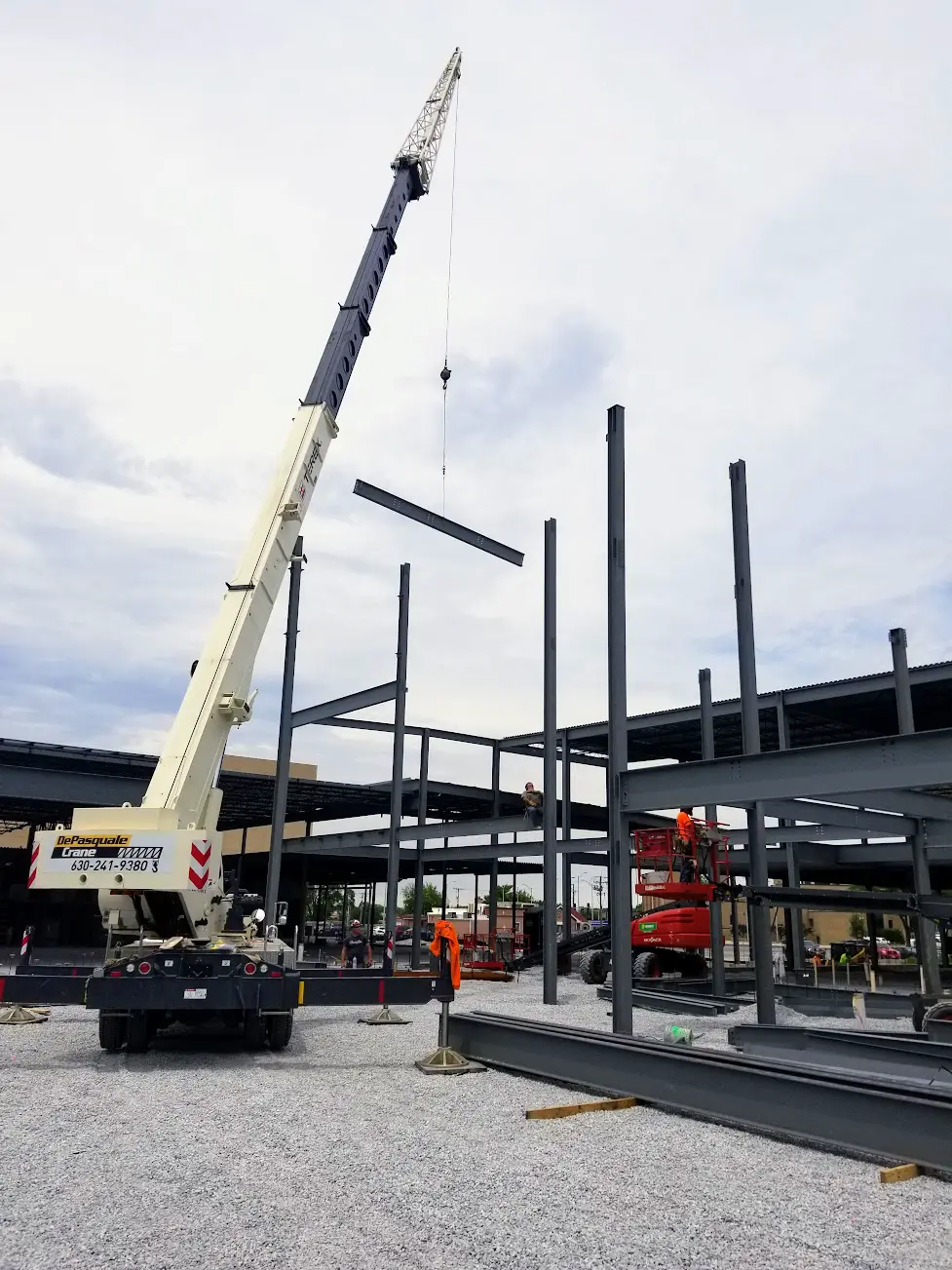
Common Steel Erection Applications
-
Commercial Construction:
Office building steel frames
Retail center structural steel
Mixed-use development projects
Hospital and healthcare facility construction
Hotel and multi-story residential buildings
Parking structure erection
-
Industrial Projects:
Manufacturing facility steel structures
Warehouse and distribution center frames
Food processing plant construction
Cold storage facility erection
Production line expansions
Mezzanine installations
-
Infrastructure & Municipal:
Bridge girder placement
Pedestrian bridge construction
Transit station structures
Public facility steel frames
Stadium and arena construction
Water treatment plant structures
Crane Rental vs. Owning Crane
-
Why Rent Instead of Own:
Steel erection companies that rent cranes avoid the capital expense of equipment ownership (often $200K-$500K+ per crane) along with ongoing costs like maintenance, storage, insurance, and operator payroll during slow periods. Renting gives you access to the right crane for each specific project—whether you need a truck crane for urban sites or an all-terrain crane for rougher terrain—without the burden of owning multiple crane types.
-
The Right Equipment for the Job:
Using properly sized cranes matched to your steel weights and building heights means faster erection cycles, safer lifts, and reduced labor hours. Our well-maintained fleet ensures your project stays on schedule without mechanical delays, and our Union Local 150 certified operators bring 25+ years of experience working specifically with steel erection crews. They understand load charts, erection sequences, and how to communicate effectively with ironworkers and site supervisors to keep your project moving efficiently and safely.
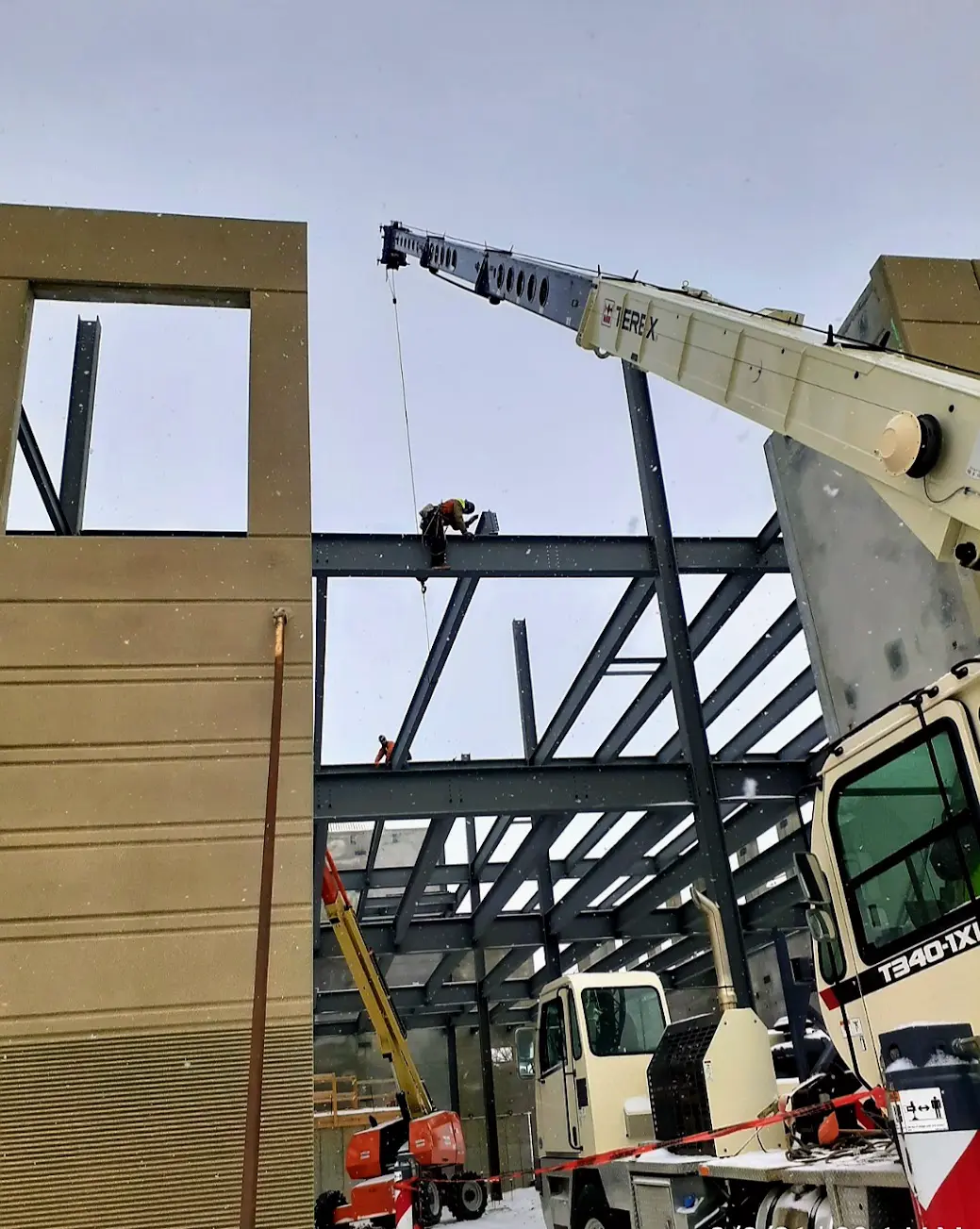
Getting Started
Our Simple 5-Step Process:
-
01
Consultation
Discuss your steel erection project requirements with our team
-
02
Customized Quote
Receive a detailed, transparent quote tailored to your project
-
03
Scheduling
We align with your erection schedule and delivery timelines
-
04
Setup & Operation
Our certified operators manage safe lifting operations on site
-
05
Completion
We handle equipment teardown and removal when your steel work is complete
Ready to schedule your steel erection crane rental? Call us at 630-686-6150 or request a quote online.
Steel Erection FAQs
What size crane do I need for my steel erection project?
The crane size depends on several factors: the weight of your heaviest steel members (beams, columns, trusses), the height of your structure, the radius from crane setup to the farthest pick point, and site access conditions. Light commercial projects with beams under 5,000 lbs may work with smaller truck cranes, while heavy industrial projects with large columns and long-span beams require larger all-terrain cranes. During consultation, provide your steel schedule, building plans, and site layout, and we’ll recommend the appropriate equipment.
Do you provide operators, or can I use my own?
For safety and efficiency, we provide Union Local 150 certified operators with all our crane rentals. Our operators have 25+ years of experience and are highly skilled in steel erection work. They understand load charts, erection sequences, and how to communicate effectively with ironworkers. If you have a qualified operator, we can discuss rental options based on your project’s specific needs.
What information do you need for a steel erection crane quote?
To provide an accurate quote, we need: the project address and site layout, building height and number of floors, steel schedule with member weights and dimensions, erection sequence timeline, radius from crane setup location to farthest steel placement, site access conditions (paved, gravel, soil bearing capacity), and your estimated rental duration (days, weeks, months). Structural drawings and site plans are extremely helpful for planning.
How far in advance should I book for a steel erection project?
For planned commercial and industrial projects, we recommend booking 3-4 weeks in advance, especially during peak construction season (spring through fall). Large projects requiring specific crane configurations may need earlier booking. If your steel delivery schedule changes or weather causes delays, contact us as soon as possible and we’ll work to adjust your crane rental schedule accordingly.
Can you accommodate multi-week or multi-month steel projects?
Absolutely. We offer flexible rental terms including weekly and monthly rates that are more economical for longer-duration steel erection projects. Many of our steel erection clients rent cranes for several weeks or months as they work through multiple floors or phases. We’ll work with your project schedule and provide consistent equipment and operators throughout your erection timeline.
Do your operators understand steel erection sequences and safety requirements?
Yes. Our Union Local 150 certified operators have extensive experience working on steel erection projects and understand the unique demands of structural steel work. They’re familiar with erection sequences, load distribution, connection points, and coordination with ironworkers. Our operators conduct pre-lift planning, understand OSHA steel erection standards, and communicate effectively with your foreman and crew to ensure safe, efficient lifts throughout the project.